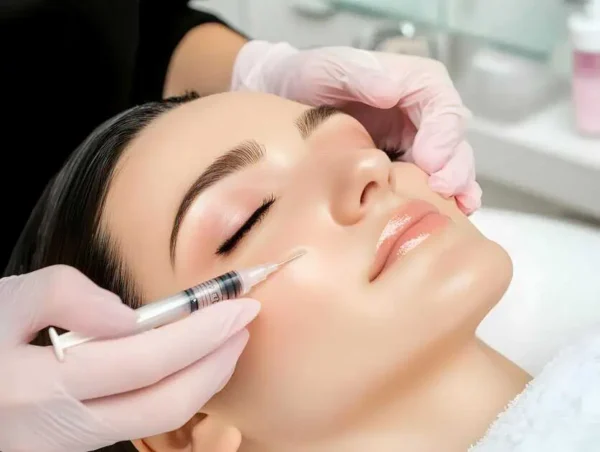
Two injectables come up constantly when patients ask about restoring facial volume without surgery, and they work in completely different ways. At LA Ageless Medical Aesthetics in Beverly Hills, the Renuva vs Sculptra question comes up in nearly every consultation about regenerative aesthetics.
Anyone searching Renuva vs Sculptra Beverly Hills CA is usually asking something simpler: which one is right for my face? The answer depends less on which product is stronger and more on which tissue you have lost.
Which is better for restoring facial volume, Renuva or Sculptra?
Neither is better across the board. Renuva supports the return of your own fat where fat has thinned, while Sculptra prompts your own collagen where structural support has softened, so the right choice depends on which tissue has been lost and where.
The Short Answer on Renuva vs Sculptra
Both are regenerative injectables, meaning they rebuild your own tissue instead of adding volume on the day of treatment. That separates them from the fillers most people know.
Renuva® works in the deeper fat layer and supports the return of your own fat cells. Sculptra® works in the structural layer and drives collagen stimulation over a series of sessions.
The decision comes down to which tissue has thinned and where on the face. Many of our patients use one, the other, or both in sequence.
What Renuva Is and How It Rebuilds Facial Volume
Renuva is an allograft adipose matrix, derived from donated human tissue and processed by MTF Biologics into an off-the-shelf injectable.
Once injected, it behaves like a scaffold. Your body gradually populates it with its own fat cells over several months as the scaffold material breaks down.
Renuva is regulated by the FDA as a human cell and tissue product, often shortened to HCT/P. It is placed into the subcutaneous and deeper fat layers, which is why it suits areas where fat volume has genuinely thinned.
What Sculptra Is and How It Rebuilds Facial Volume
Sculptra is a poly-L-lactic acid biostimulator that prompts your body to produce new collagen, then absorbs over time and leaves the collagen response behind.
It is not a hyaluronic acid filler. Sculptra adds no immediate volume and cannot be dissolved, which is a meaningful difference from how hyaluronic acid fillers work.
Sculptra is FDA-approved for specific facial indications. Some areas fall outside those indications and are used off-label at a provider’s discretion. Treatment runs across a series of sessions spaced weeks apart, with results accumulating between them.
The Differences That Actually Change Your Decision
Four practical contrasts shape most decisions:
- Tissue rebuilt. Renuva supports fat. Sculptra supports collagen. Hollowing usually points toward the first, softening structure toward the second.
- Depth. Renuva sits deeper in the fat compartment. Sculptra works in the layer that supports the skin above it.
- Pacing. Renuva is typically completed in one to three short sessions. Sculptra is built across a planned series.
- Reversibility. Neither can be dissolved the way hyaluronic acid can, which raises the value of a careful assessment.
Area tends to follow tissue type. Temples, under-eye hollows, and midface flattening often reflect fat loss, while cheek support and jawline definition more often reflect softening structure.
How Results Build and How Long They Typically Last
Both treatments are gradual, and neither produces a same-day result for patients accustomed to filler; that takes some adjustment.
With Renuva, most patients see volume develop over roughly three to six months as the scaffold is replaced by their own fat. Sculptra builds collagen across the treatment series over several months.
Longevity varies by patient, treatment area, and amount used. Both are long-lasting options for natural facial rejuvenation, though no honest provider will quote a fixed number of years.
Can You Combine Renuva and Sculptra?
Combining the two is common, because they address different tissue layers rather than competing for the same one. Restoring fat volume and supporting collagen are complementary goals.
Sequencing and spacing are clinical decisions. Your injector determines the order, the interval, and whether other regenerative options on our menu, such as PRP and PRF, belong in the plan.
For specifics, our pages on what a Renuva treatment involves and how Sculptra builds collagen over time cover each one in full.
How to Decide Which One Fits Your Goals
Bring three questions to your consultation: what changed, where, and over what period. Those answers tell an experienced injector more than a product preference does.
Photographs and an in-person assessment outperform self-diagnosis. What looks like sagging is often lost volume, and what looks like lost volume is sometimes skin laxity.
At LA Ageless, an assessment means examining the face in motion and at rest, reviewing your history, and explaining the reasoning behind a recommendation. You can read more about Our Team.
Common Questions About Renuva and Sculptra
Is either one a filler?
No. Fillers add volume immediately using a gel. Both of these prompt your body to rebuild its own tissue.
Does either hurt, and what is recovery like?
Most patients tolerate both well. Mild swelling, redness, or bruising at the injection site typically settles within a few days.
Can either be reversed or adjusted?
Neither can be dissolved. Results can be built on over time, which is why staged, conservative treatment is the safer approach.
Is Renuva made from donor tissue?
Yes. It is an adipose allograft matrix from screened donated human tissue, processed to preserve its naturally occurring collagens and proteins.
Getting a Clear Answer for Your Own Face
There is no universal winner in the Renuva vs Sculptra comparison, only the right answer for your tissue, your areas of concern, and what you want your face to look like in a year.
If you have been going back and forth, the most useful next step is a conversation with an injector who can assess the tissue in question. Book Your Regenerative Aesthetics Consultation Today, and we will walk you through both options honestly.