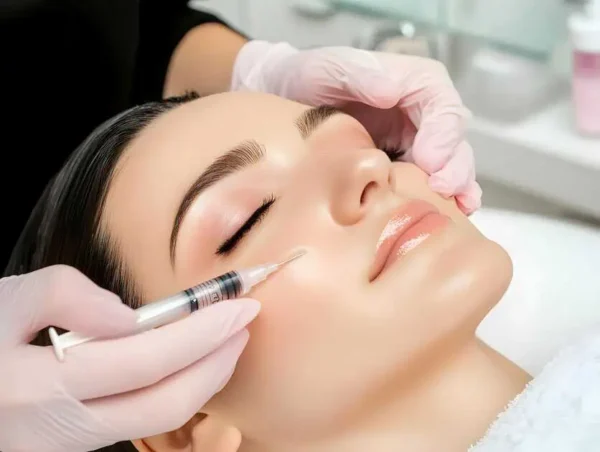
If you have lost fullness in your cheeks, temples, or under-eyes, you have probably come across two very different paths to restoring it. Dermal fillers have been the go-to option for years, but a newer treatment called Renuva, which patients are asking about, works in a completely different way, using your own body to rebuild volume from within.
At LA Ageless Medical Aesthetics, we get asked almost daily which option makes more sense for a given patient. Renuva vs dermal fillers is not a simple better-or-worse comparison. It comes down to how each treatment works and what kind of result you are hoping to see. This guide walks through the real differences so you can have an informed conversation at your consultation.
How is Renuva different from dermal fillers? Renuva uses a bio-engineered fat matrix that supports your body’s own tissue in gradually rebuilding volume, while dermal fillers add volume immediately through an injectable gel that does not require your body to regenerate anything.
How Renuva And Dermal Fillers Restore Volume Differently
The core difference between these two treatments is how they create volume. Dermal fillers are injectable gels, most often made from hyaluronic acid, that add structure and lift the moment they are placed under the skin. The result is visible almost immediately because the filler itself is providing the volume.
Renuva works differently. It is an autologous fat matrix, a bio-engineered scaffold made from processed donor fat tissue that is injected into areas of volume loss. Rather than sitting in place as filler does, this fat transfer alternative Beverly Hills patients choose gives the body a structure to rebuild its own fat cells around. Over time, your tissue populates that scaffold with living fat, creating natural volume restoration that is genuinely yours.
Both treatments address the same problem: facial volume loss treatment for cheeks, temples, and other areas that thin with age. They simply take different roads to get there, one immediate and one biological.
Comparing The Look, Feel, And Timeline Of Results
Timeline is often the biggest factor in choosing between these two options. Filler results appear right away, sometimes with mild swelling that settles within a few days. What you see at your appointment is close to the final look.
Renuva takes patience. Because it relies on your body regenerating fat around the matrix, initial results build gradually over several weeks to a few months as your own tissue integrates. Many patients describe the eventual feel as softer and more natural, since the volume is living tissue rather than an injected product.
Neither timeline is inherently right or wrong. It depends on whether you want to see a result today or are comfortable letting your body do the slower work over time.
Which Treatment Is Better For Different Goals?
There is no single winner here, only a better fit for your specific goals.
- If you want correction before an event or simply prefer seeing results the same day, dermal fillers are usually the more practical choice.
- If subtlety and a gradual, natural-looking volume restoration matter more to you than speed, Renuva may be worth exploring.
- Fillers tend to excel in precise areas like lips and under-eye hollows where controlled shaping matters.
- Renuva is often considered for broader areas of facial volume loss where patients want their own tissue doing the work long term.
Your provider can help match the treatment to your anatomy and how quickly you want to see change.
How Longevity And Maintenance Compare
Dermal fillers are generally temporary, with most formulas lasting anywhere from six months to two years depending on the product and treatment area. Maintenance visits are part of the plan from the start.
Renuva’s regenerative approach may lead to longer-lasting results for some patients, since the goal is for your own fat cells to remain in place once they populate the matrix. That said, results still vary from patient to patient, and no regenerative treatment produces identical outcomes for everyone. Metabolism, treatment area, and how your body responds to the matrix all play a role.
Neither treatment should be viewed as permanent. Realistic maintenance expectations, discussed honestly at your consultation, are part of getting a result you will be happy with over time.
Can Renuva And Dermal Fillers Be Used Together?
These treatments are not always an either-or decision. In some cases, a provider may recommend using dermal fillers to address immediate concerns while Renuva works gradually in the background to rebuild volume in another area.
Combining treatments can allow each one to do what it does best: filler for precision and speed, Renuva for a longer-term, natural volume restoration strategy. Whether this makes sense for you depends entirely on your goals, your anatomy, and how your provider structures your individualized treatment plan.
Renuva And Dermal Fillers: Making The Right Call For Your Face
Choosing between Renuva and dermal fillers ultimately comes down to what matters most to you: immediate correction or a gradual, natural rebuilding of your own volume. Fillers remain a reliable option for precise, fast results, while Renuva offers a regenerative approach for patients who want their body doing more of the work over time. Both can play a role, sometimes even together, depending on your goals and anatomy.
If you are weighing Renuva vs dermal fillers and want guidance specific to your face and goals, our team at LA Ageless Medical Aesthetics, a trusted med spa in Beverly Hills, CA and medical aesthetics in Beverly Hills destination, is here to help. Contact us to Schedule Your Renuva Consultation Today, and let’s build a plan that fits how you want to look and feel.